from 1945
from the hardship of the post-war years
and from one’s first home to a new home
a new use
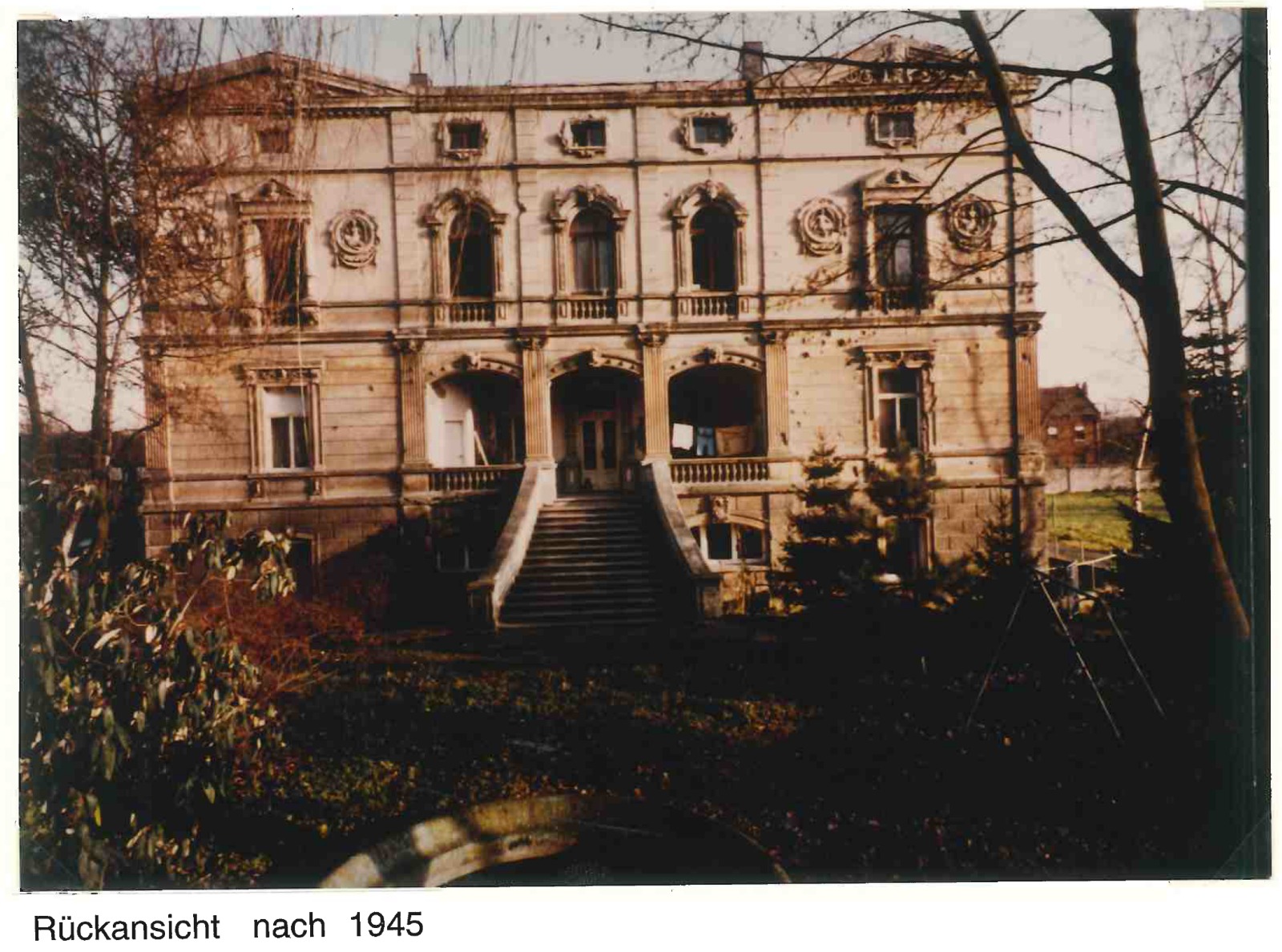
Immediately after the end of the war, Villa Buth was once again used as accommodation. To provide housing for as many people as possible, additional walls were erected.These completely dilapidated rooms still bear witness today to the hardship of the post-war years.
Over time, it was mainly workers from the Eichhorn factory who moved into the accommodation that had been created. For many of them, Villa Buth represented a home in a new homeland.
a distorted inside
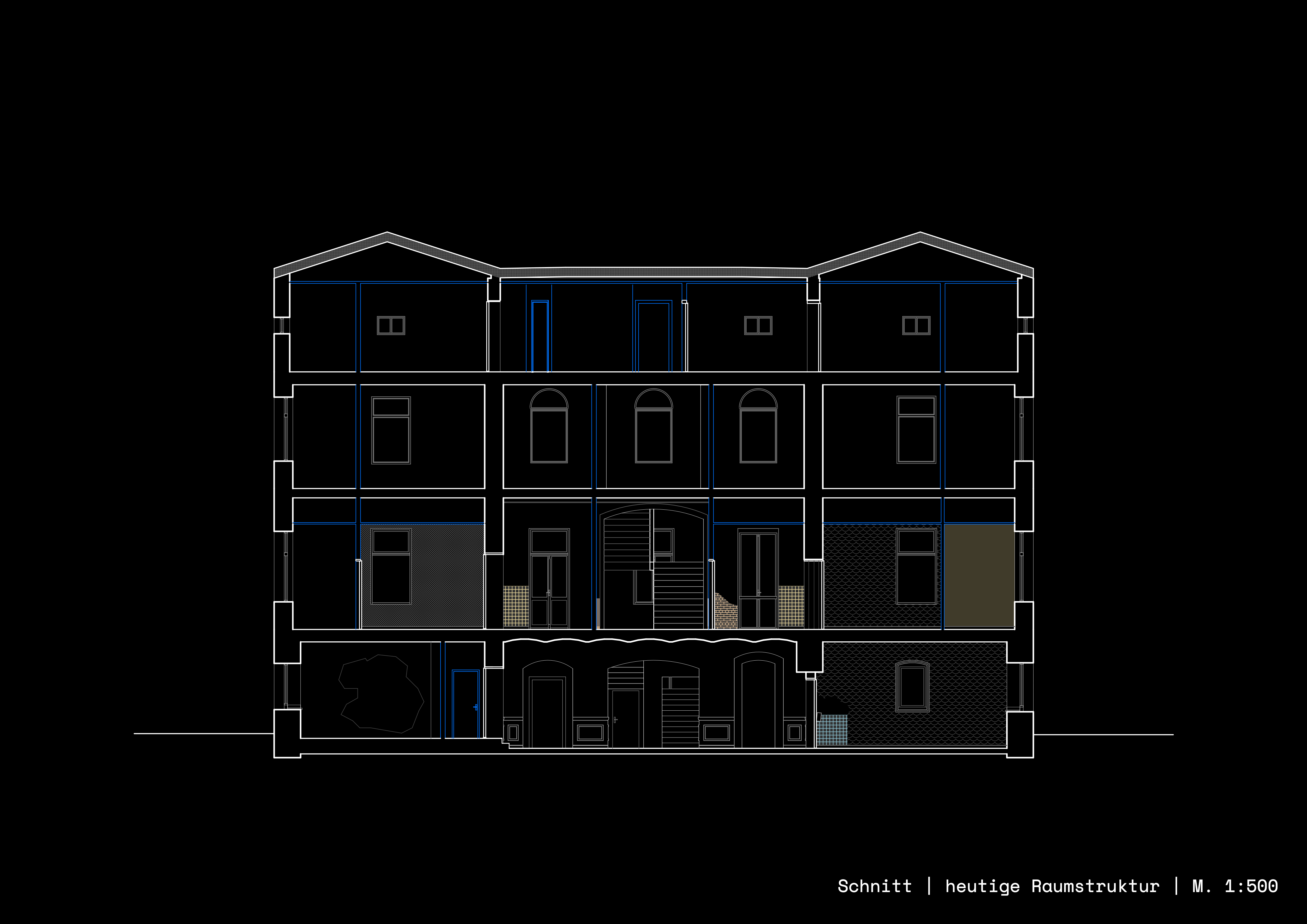
Dark and winding rather than airy and light-filled. A dense network of rooms that seem to adjoin one another at random. These are the impressions of the rooms that can be found at Villa Buth today.
go to the article
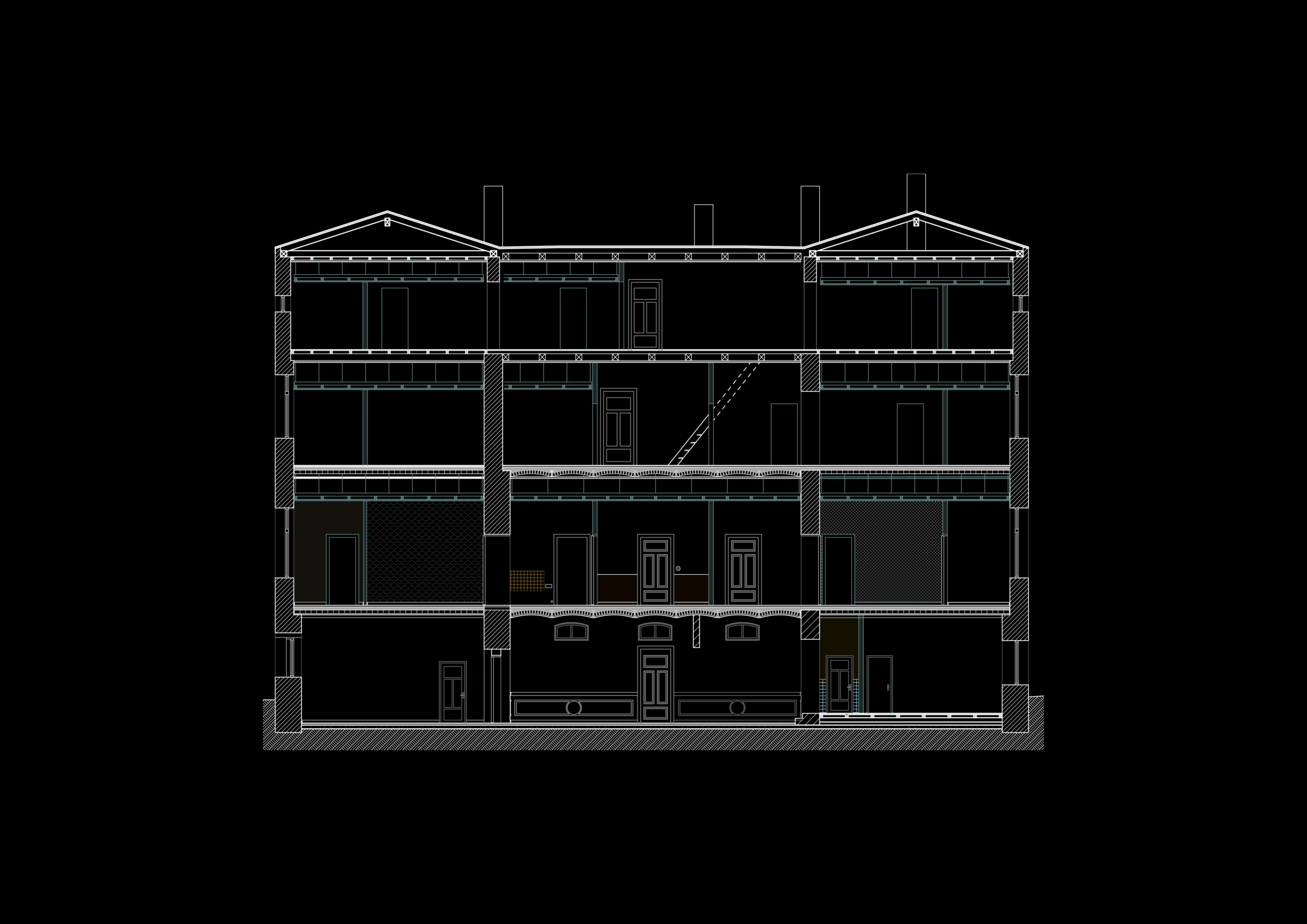
What the building promises from the outside is nowhere to be found inside. Suspended ceilings and recessed walls make what was once large seem small. Painted-over stucco, wallpaper and tiled splashbacks conceal the once magnificently designed stucco features. It is now almost impossible to imagine that these were once state rooms. The villa’s most recent period of use is most clearly evident at Villa Buth today. Its inhabitants have left their mark, the functions of the rooms, the layout of the living areas—all of this can still be analyzed most clearly today.
One building – fourteen residential units
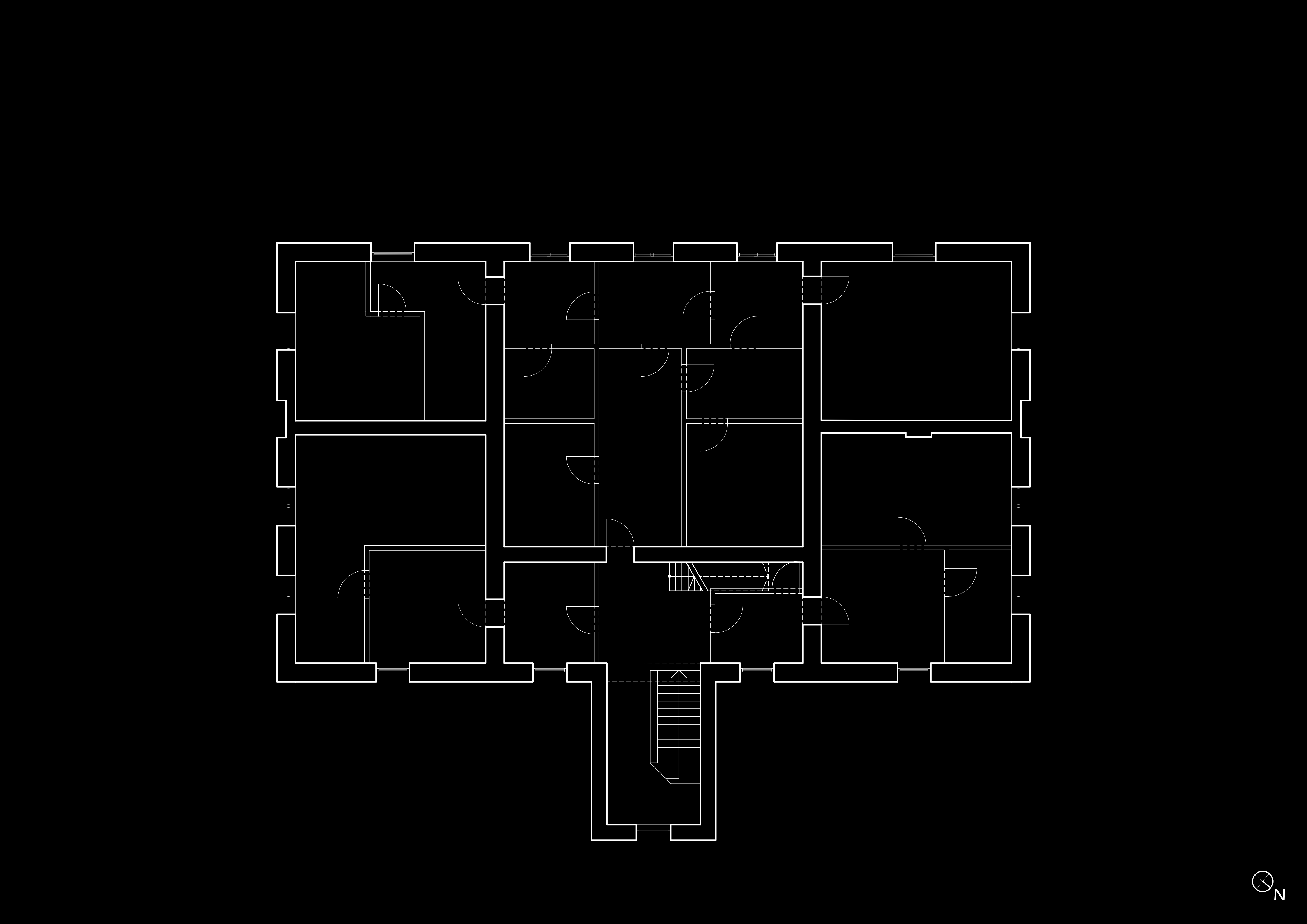
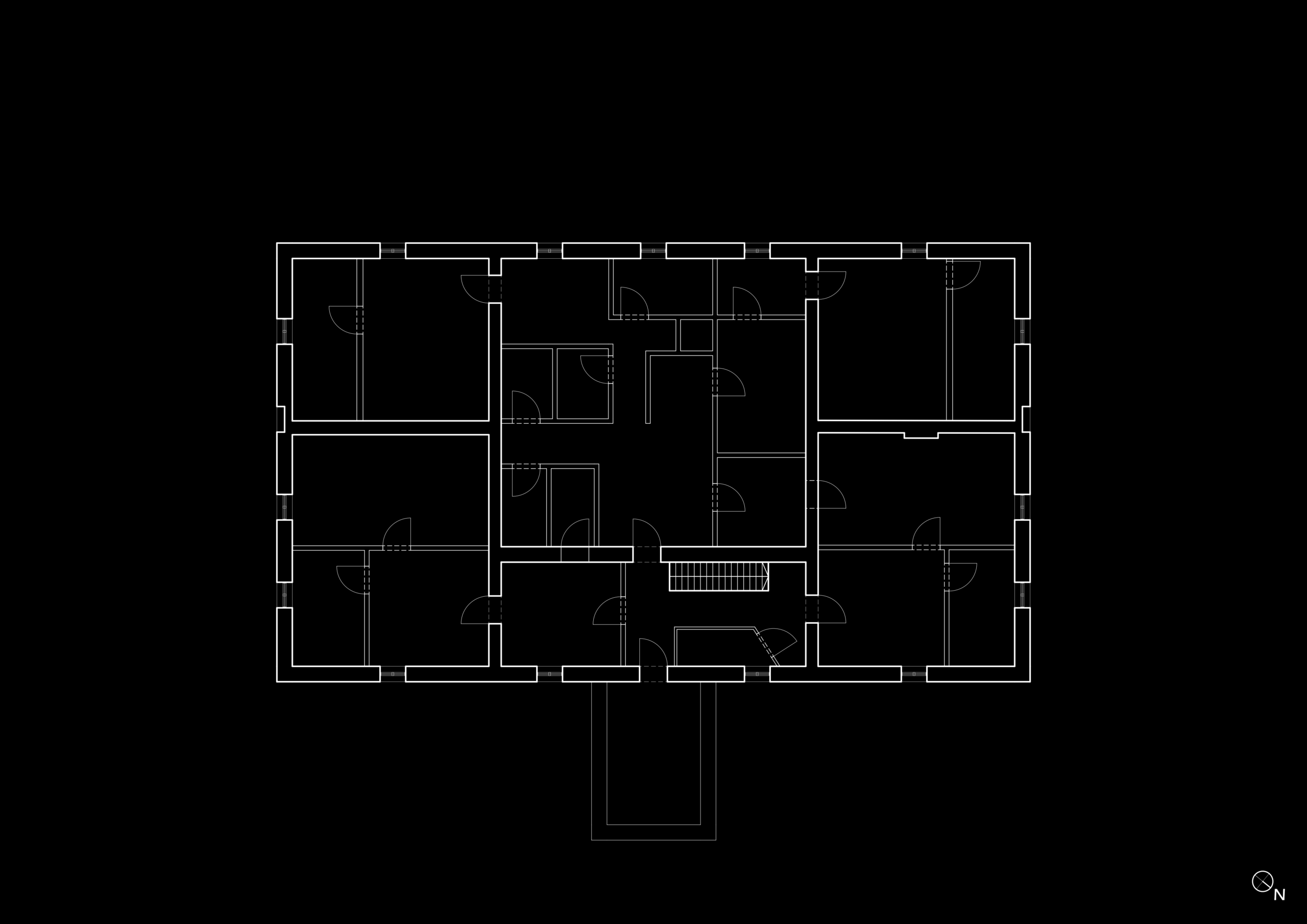
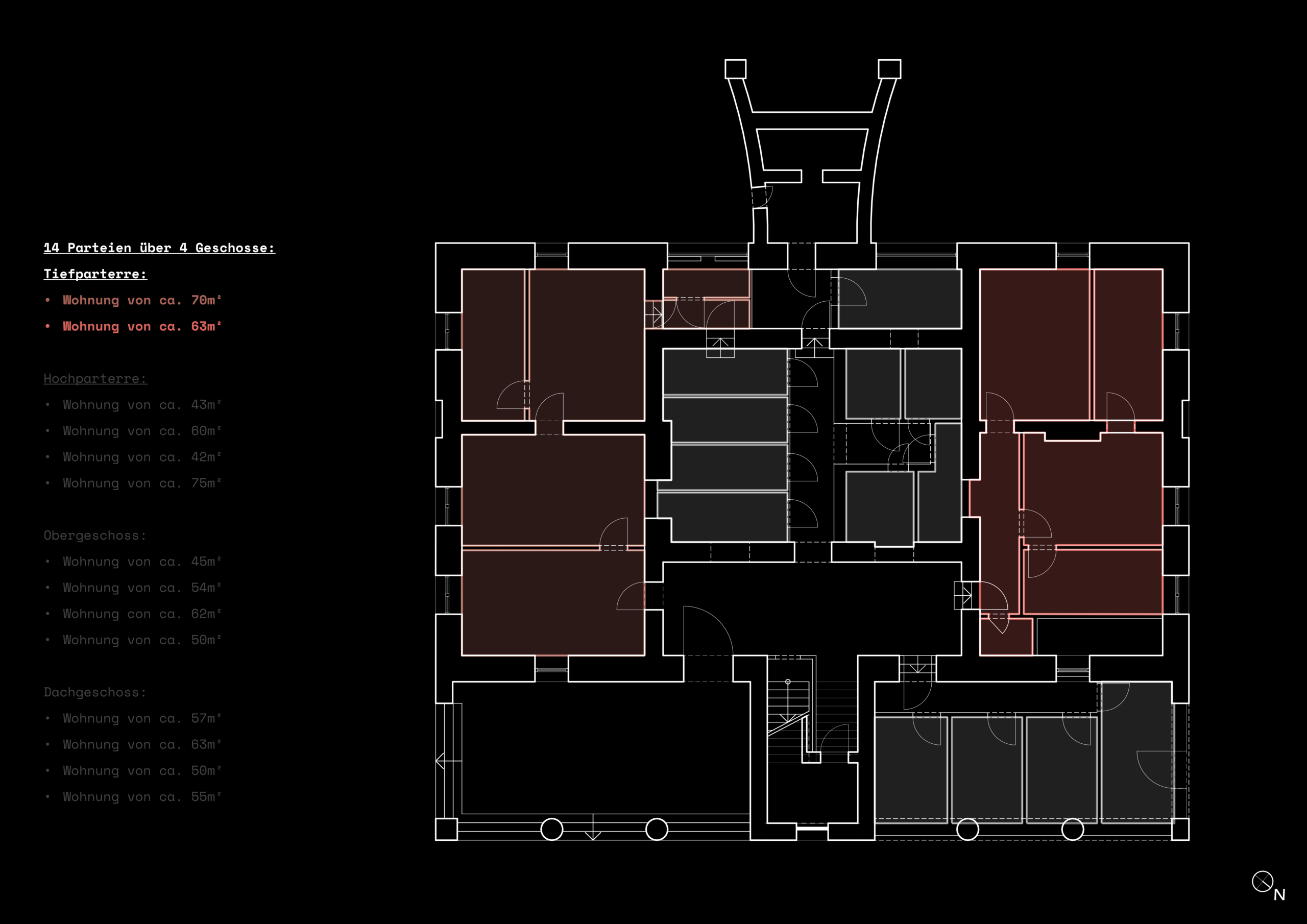
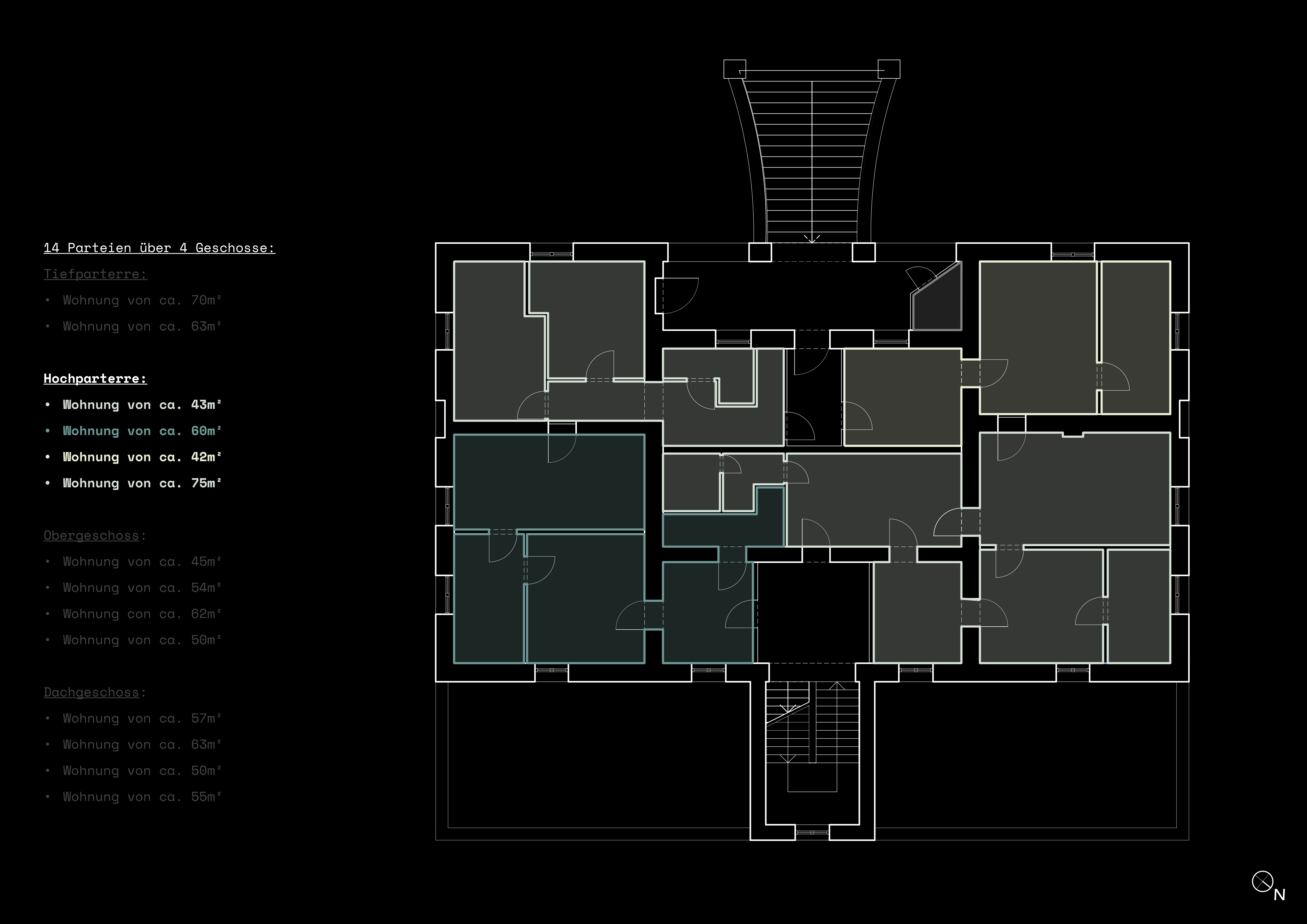
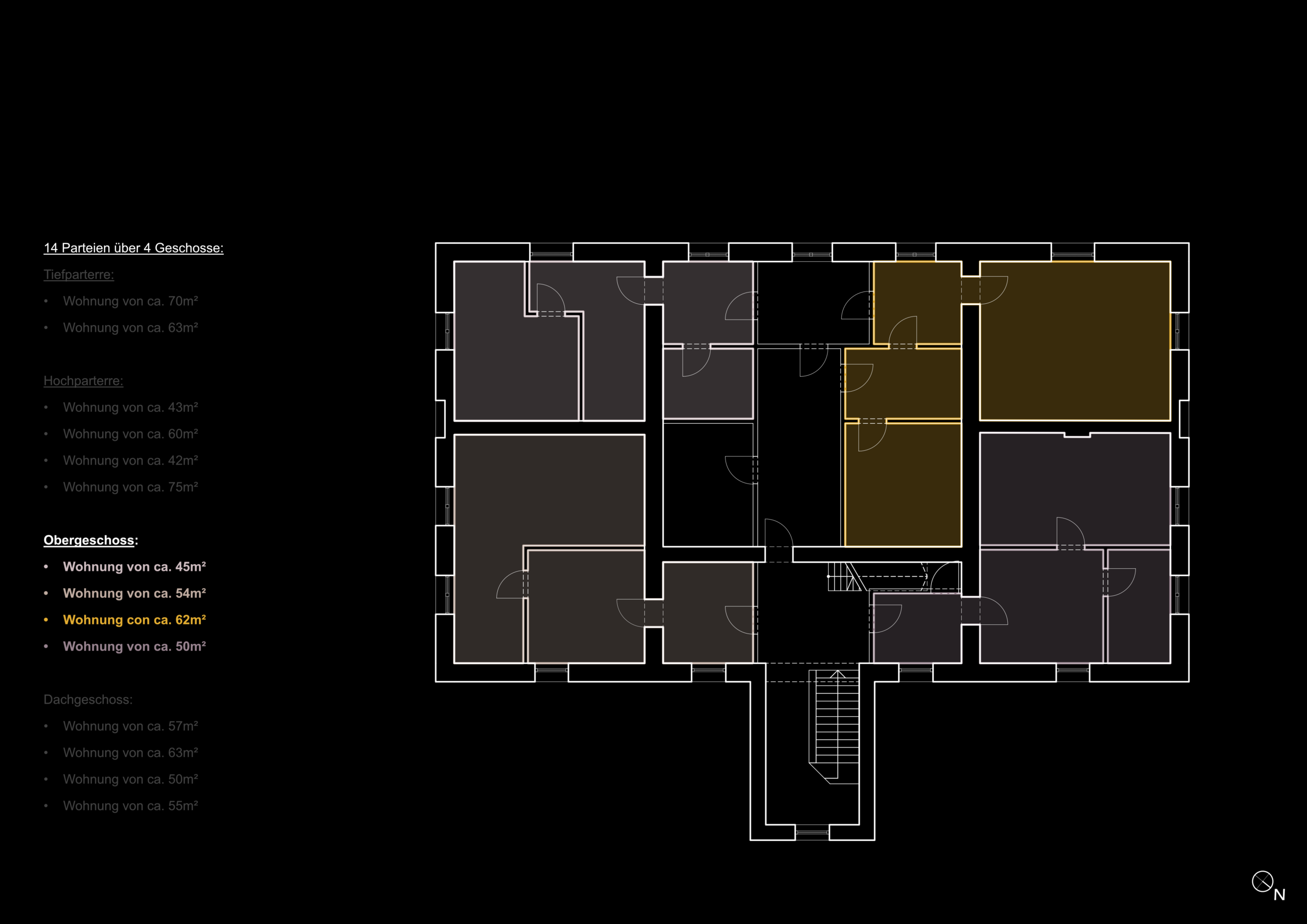
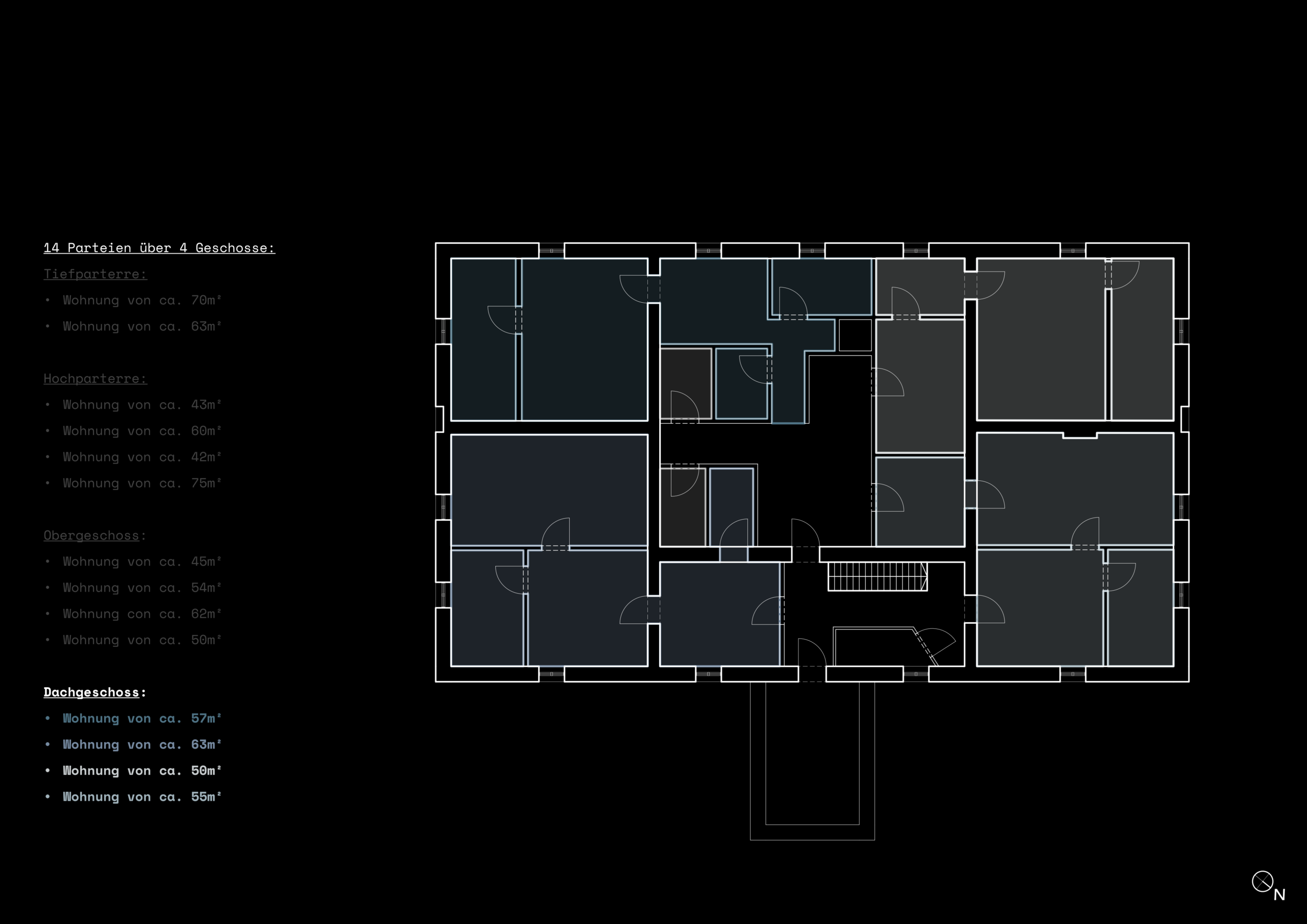
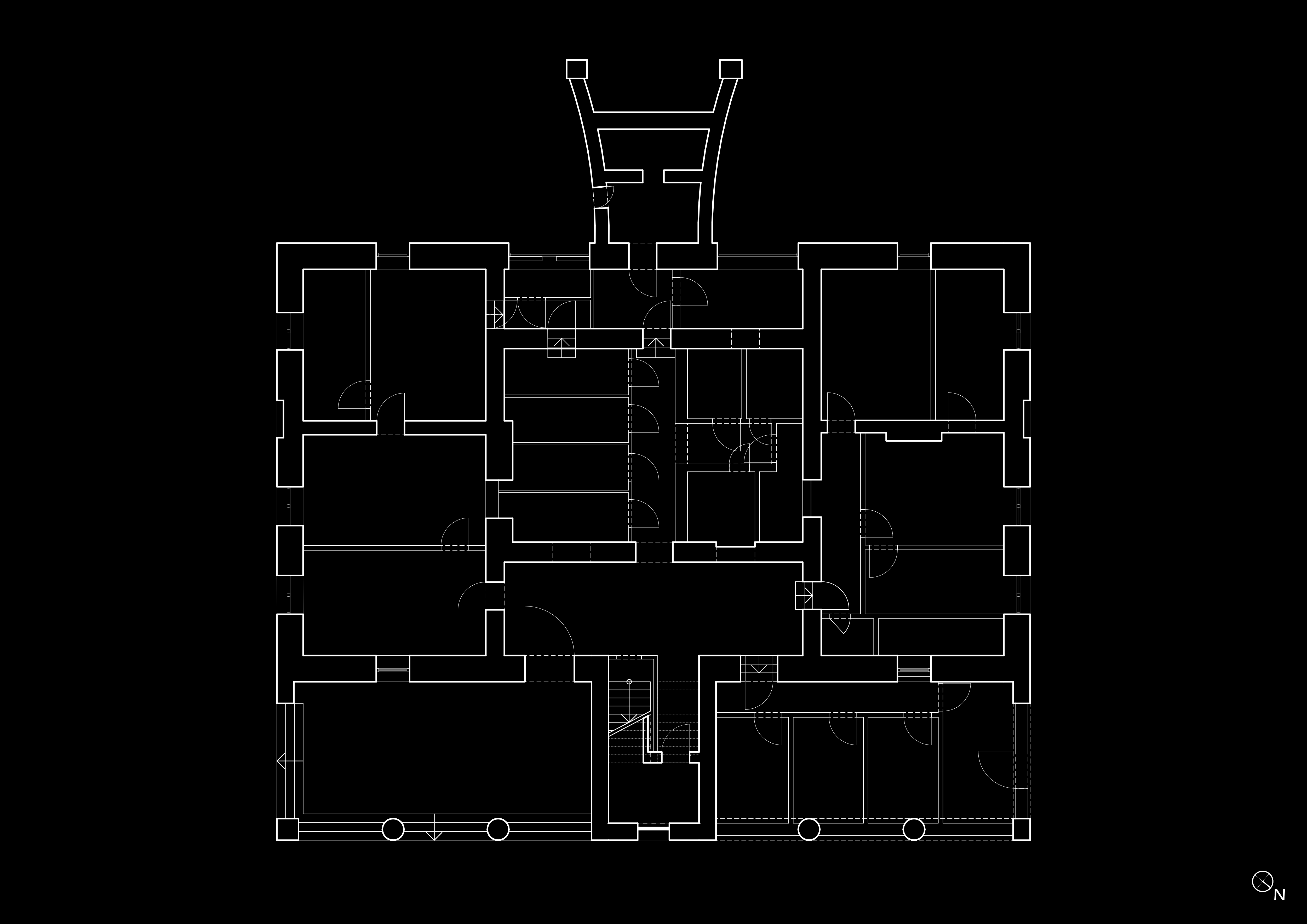
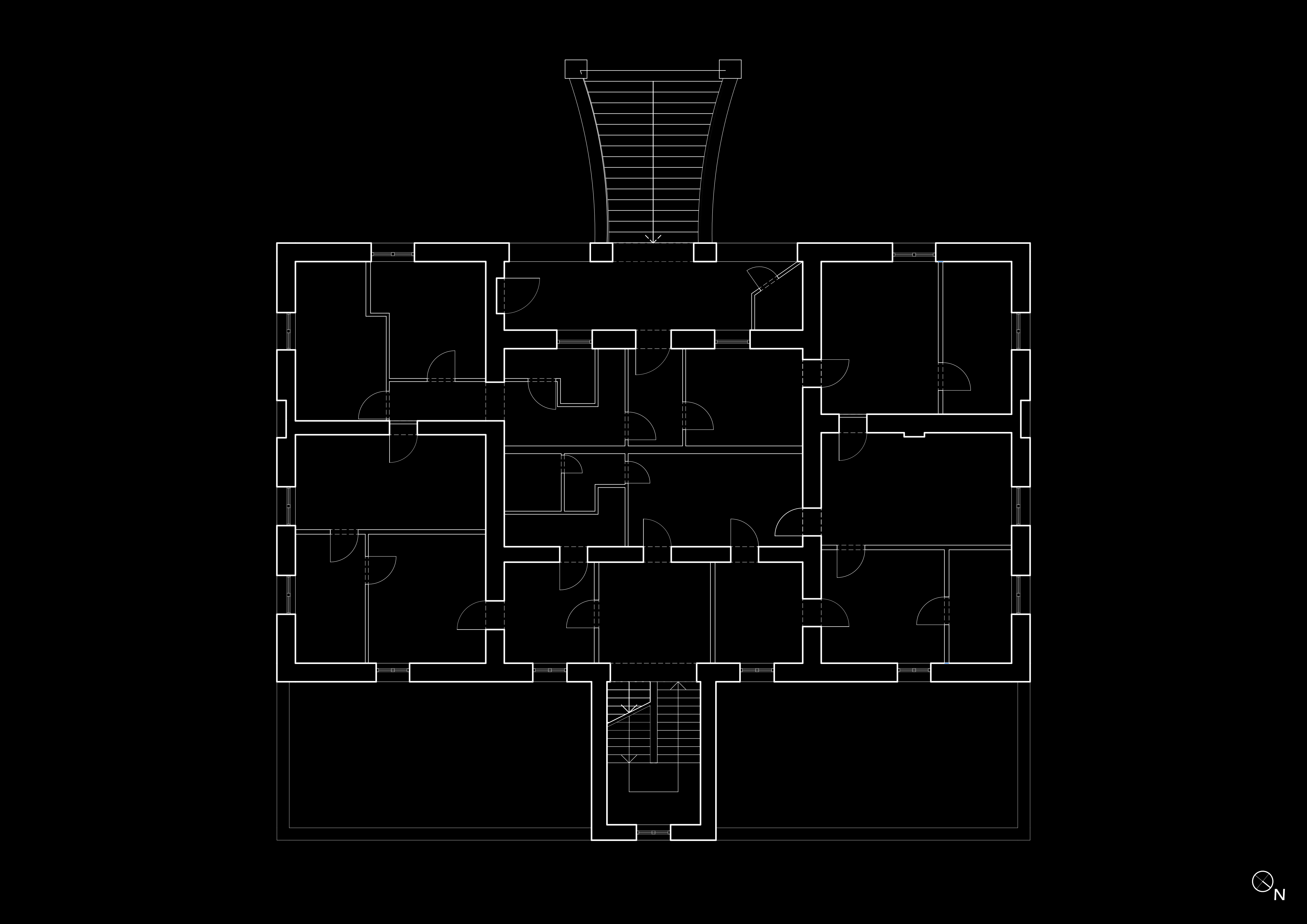
What were once spacious rooms have been divided into as many as nine rooms.The building, which was vierzehn Wohneinheiten kommt in dem Gebäude unter, das originally built as a residence for a single family and their staff, now houses up to fourteen residential units.
go to the article
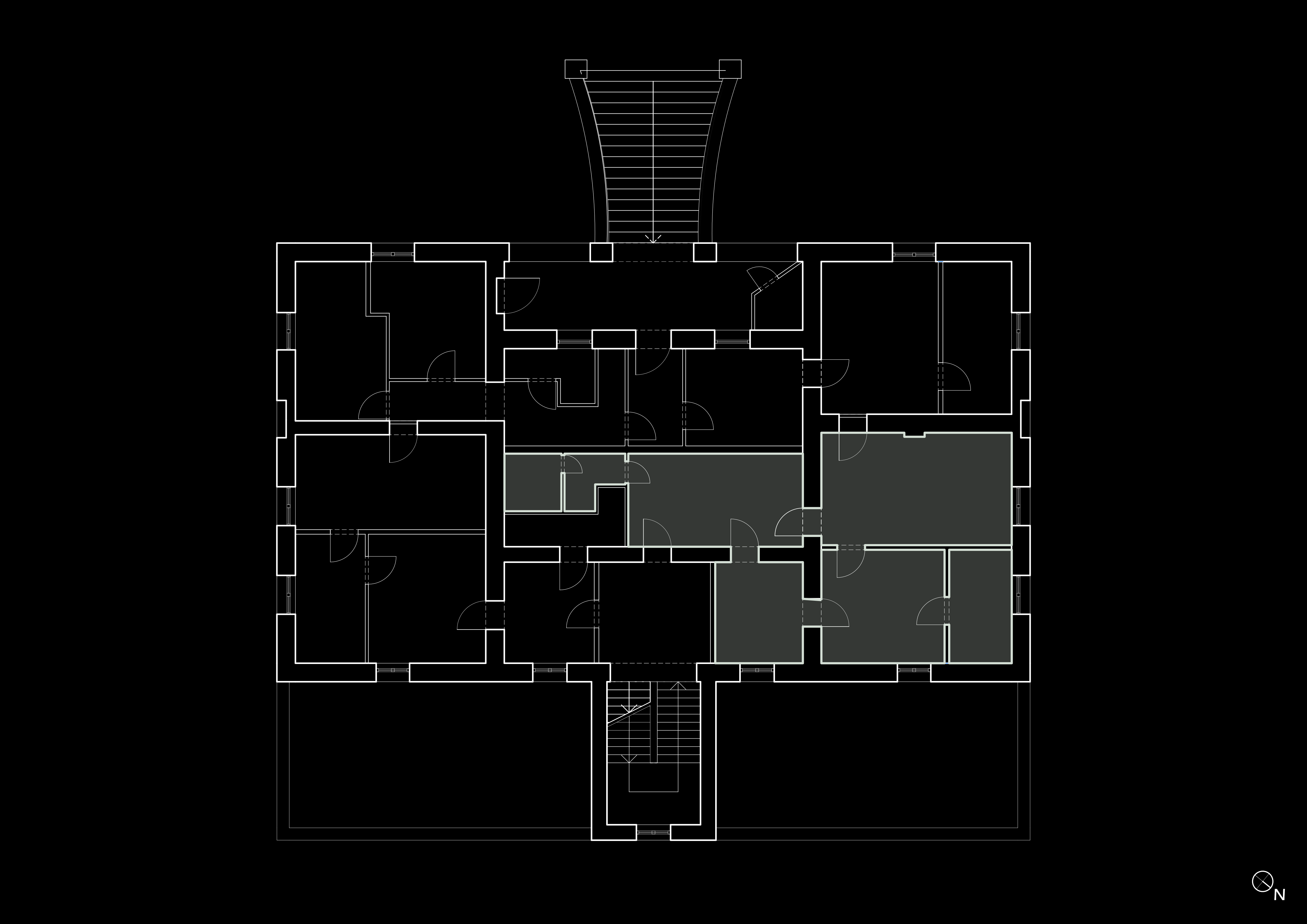
A closer look at the spatial layout still visible today reveals that Villa Buth was clearly divided into fourteen residential units: up to four units per floor, each equipped with a kitchen and bathroom. In addition, there are separate rooms that were likely used by the numerous residents as cellars or storage rooms. For this new residential layout, the originally spacious rooms were subdivided into up to nine separate rooms.The resulting spatial layout does not follow any discernible pattern and appears to be based on the purely practical goal of accommodating as many apartments as possible in the building. The demand for quality housing fell victim to the housing shortage of the postwar years, resulting in rooms with confusing layouts as well as those that had to manage entirely without daylight or natural ventilation.
Fourteen parties—two entrances
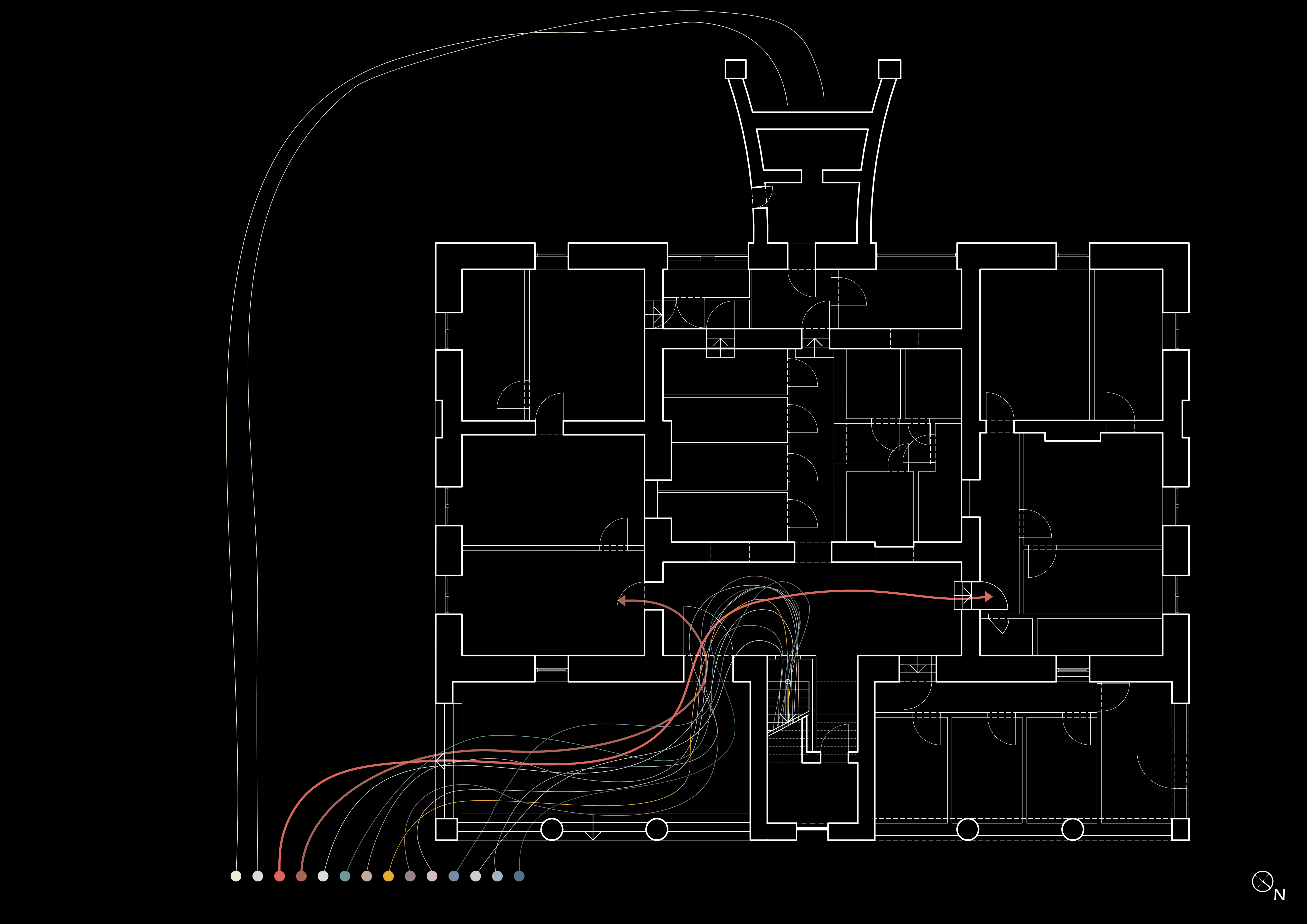
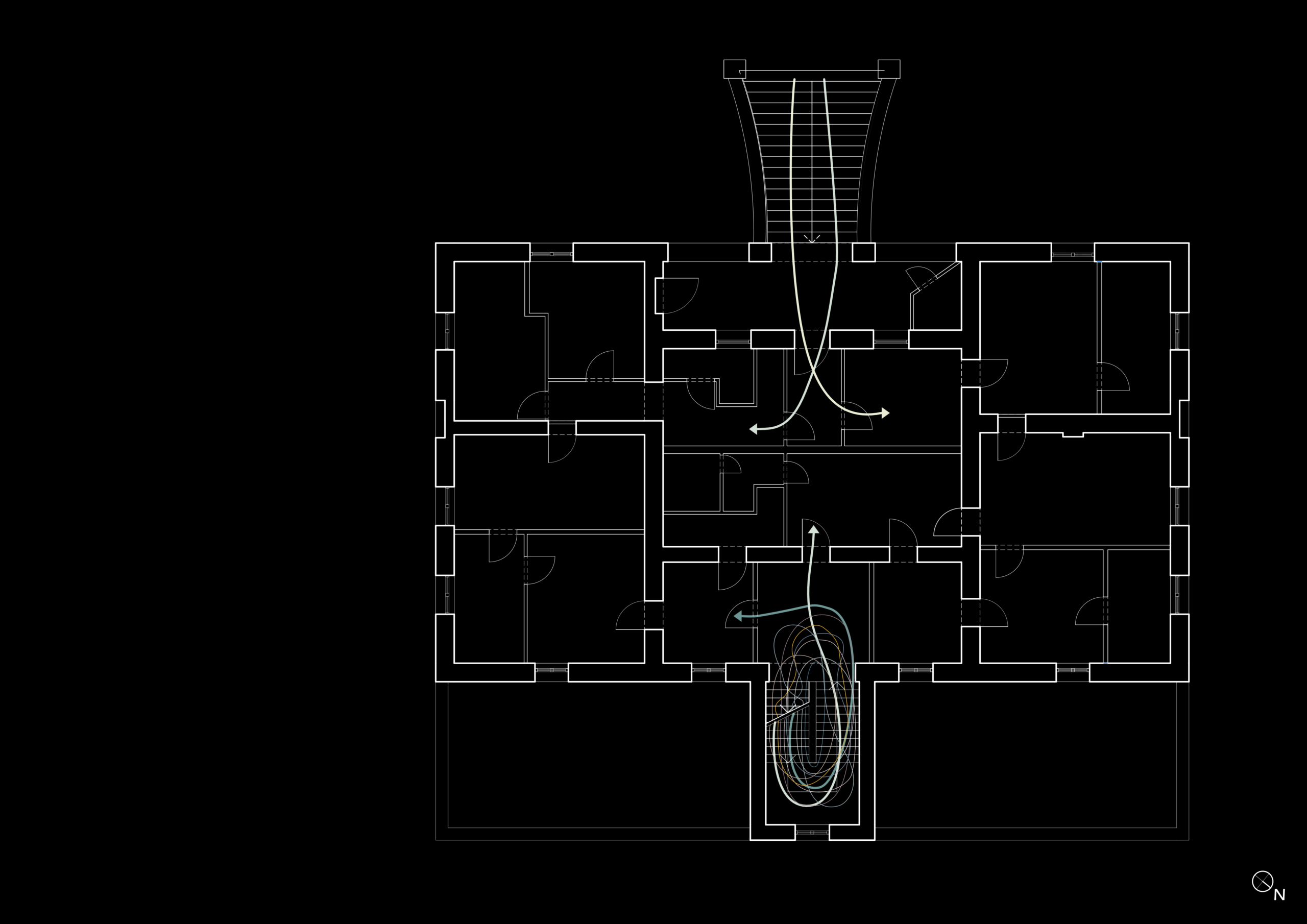
Of the fourteen units created, two were accessed via the outdoor staircase the original main entrance—while the remaining twelve units were accessed through the entrance door on the lower ground floor. The stairwell was shared by ten residential units.
go to the article
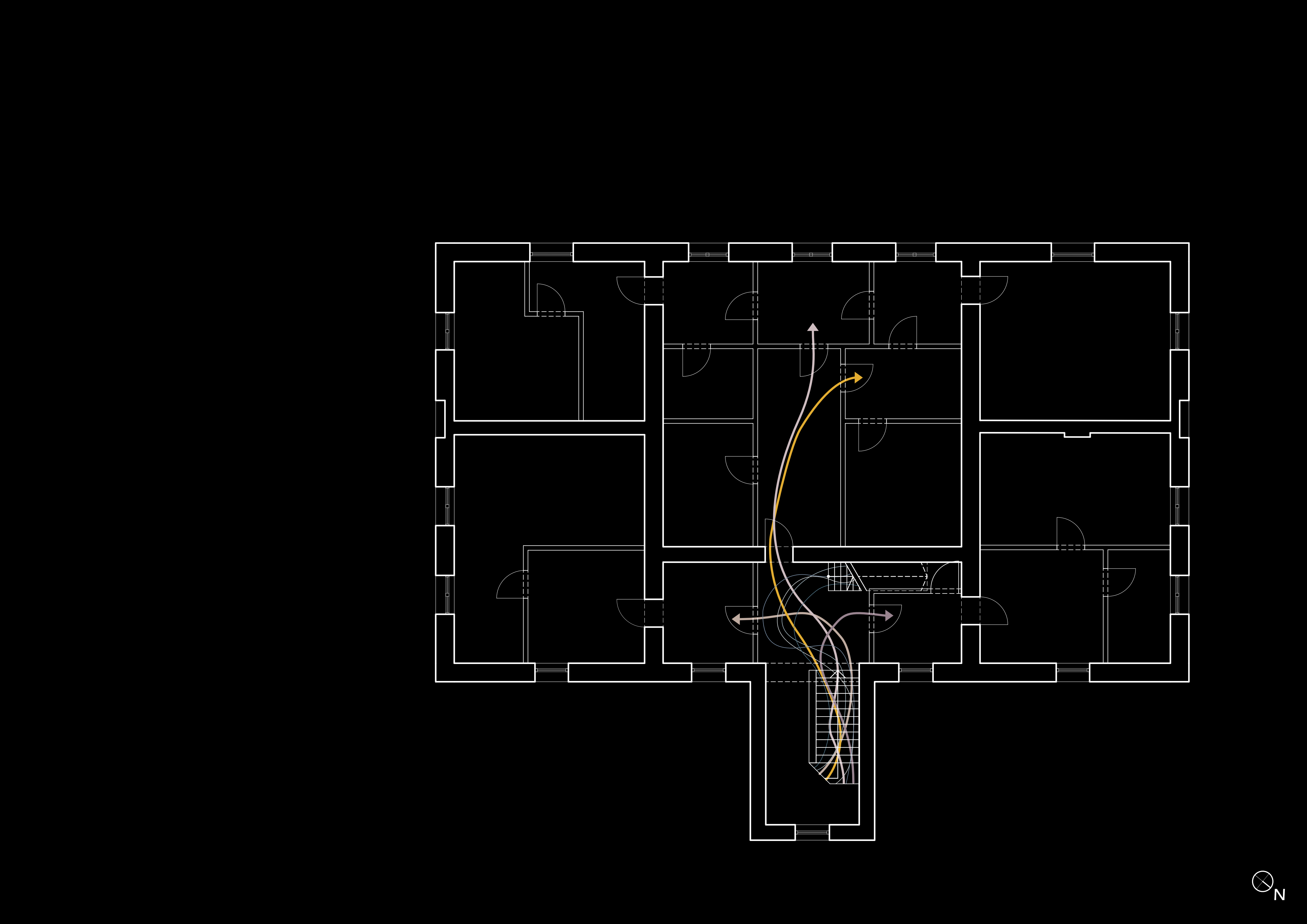
The conversion into a densely populated apartment building also created entirely new access routes. The open staircase—presumably the original main entrance—is still used by two units for access; the remaining ten residential units are accessible via the street-side entrance on the lower ground floor.
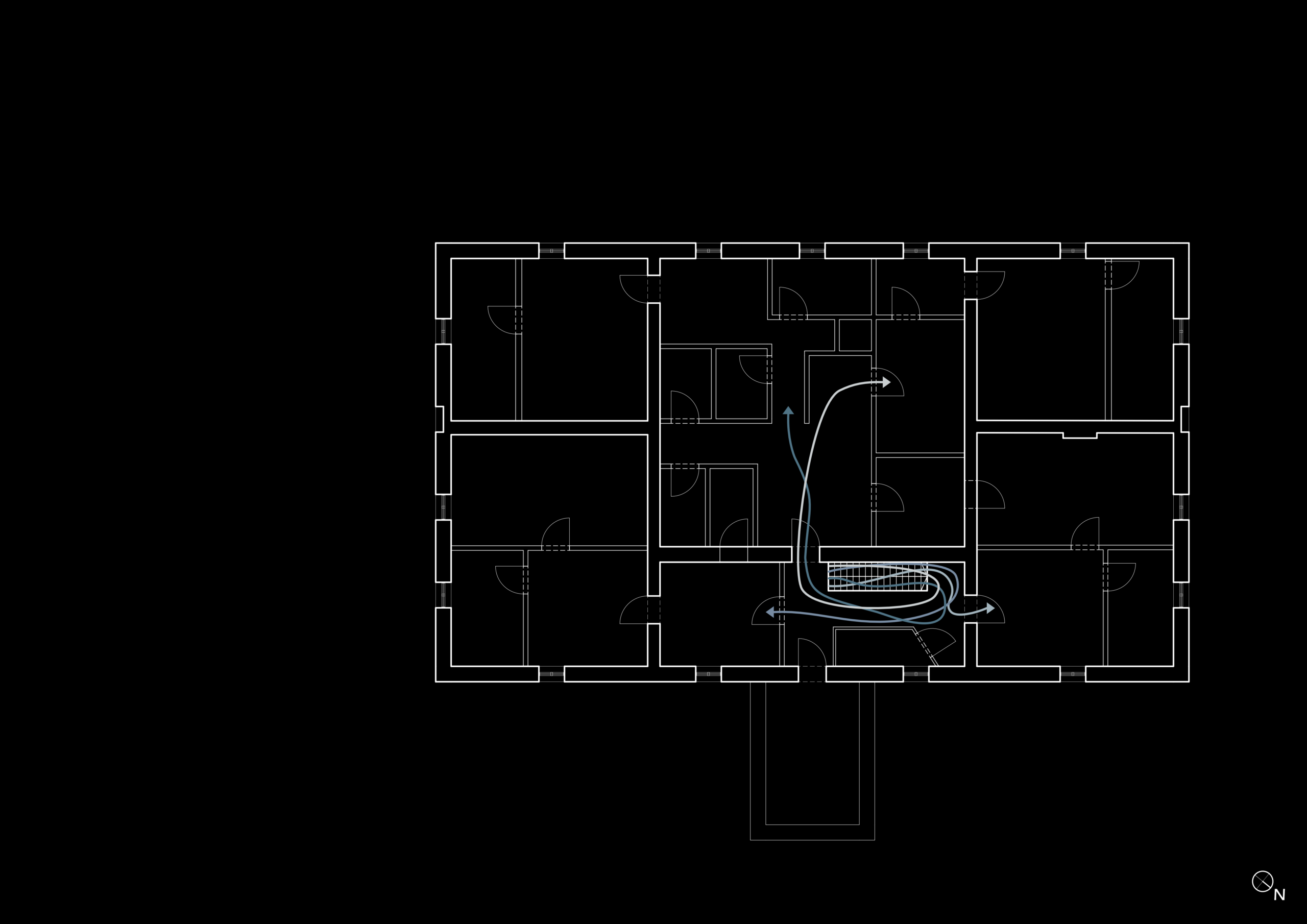
The flow of movement within the building has also adapted to the new structure. The stairwell was shared by the residents of ten residential units. Within the individual units, one now moves from one room to another—completely interlocked; there is no discernible, logical system of hallways or pathways.
Pathways that were once imagined as stately and winding—the approach to the building through a landscaped garden and dining rooms flanked by loggias—are no longer conceivable with a resident population of twelve families. Instead, there is a bustling hustle and bustle and a tangled maze.
Traces of a living space
Tile backsplashes and wallpaper, bathroom fixtures, and old instant water heaters— the villa’s most recent period of use is most evident today,and the functions of the rooms can be identified based on the traces they leave behind.
Badr Ouali's family
A First Home in a New Country
The story of Badr Ouali’s family shows that Villa Buth has, in recent times, also served as the first stop for people arriving in a new country. darstellte, zeigt die Geschichte der Familie von Badr Ouali.
go to the article
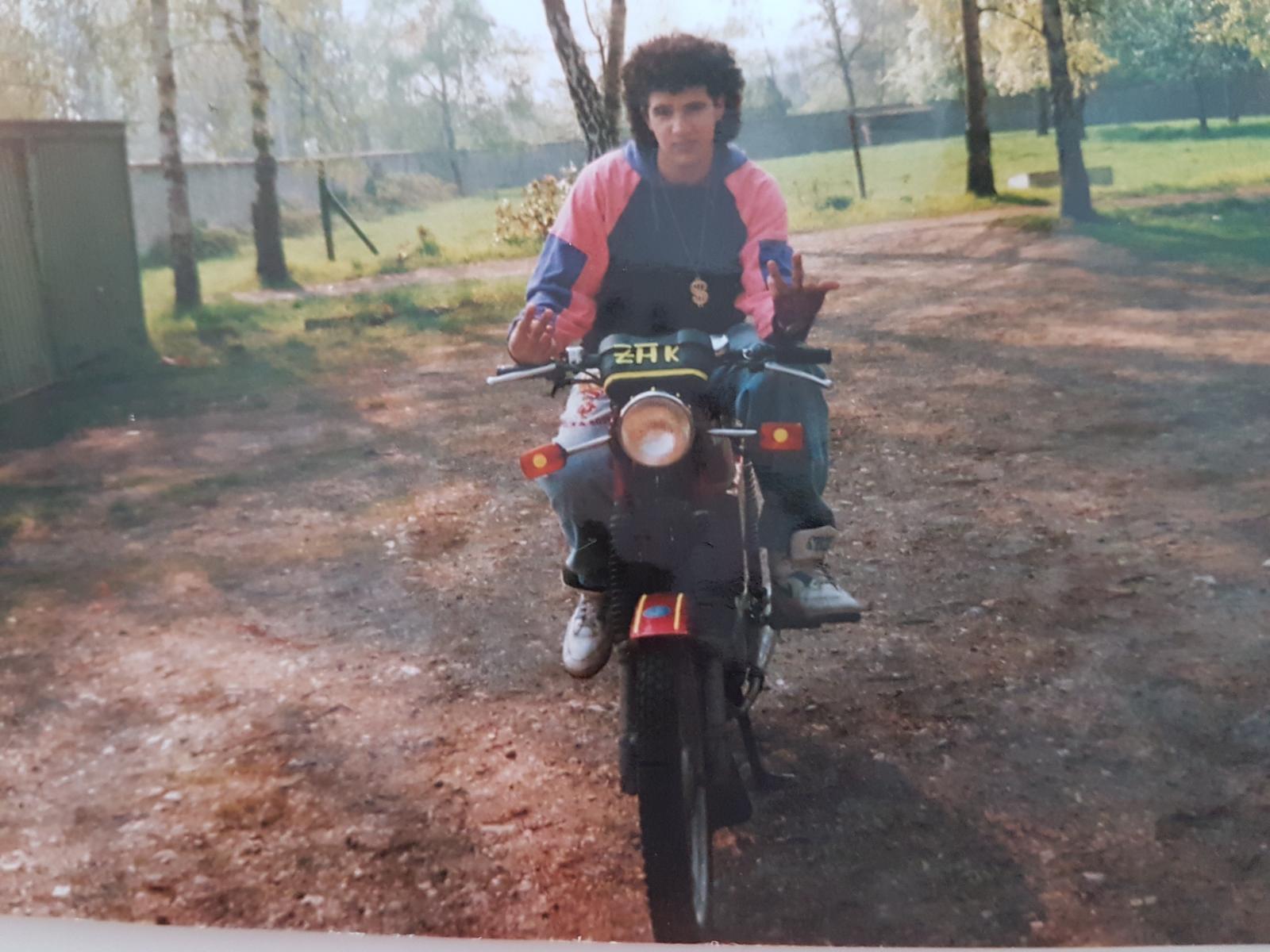
The Ouali family was likely among the last residents of Villa Buth. In an interview, Badr Ouali talks about his childhood and his memories of the “Villa”:
His father came to Germany from Morocco as early as 1964; Badr’s mother and his older siblings followed him in 1986. His father worked at the Eichhorn factory, and Villa Buth was their first home in their new country. It wasn't easy; the family had to learn a new language, and Badr's parents could neither read nor write in the Latin alphabet—his oldest brother was already a teenager at the time.
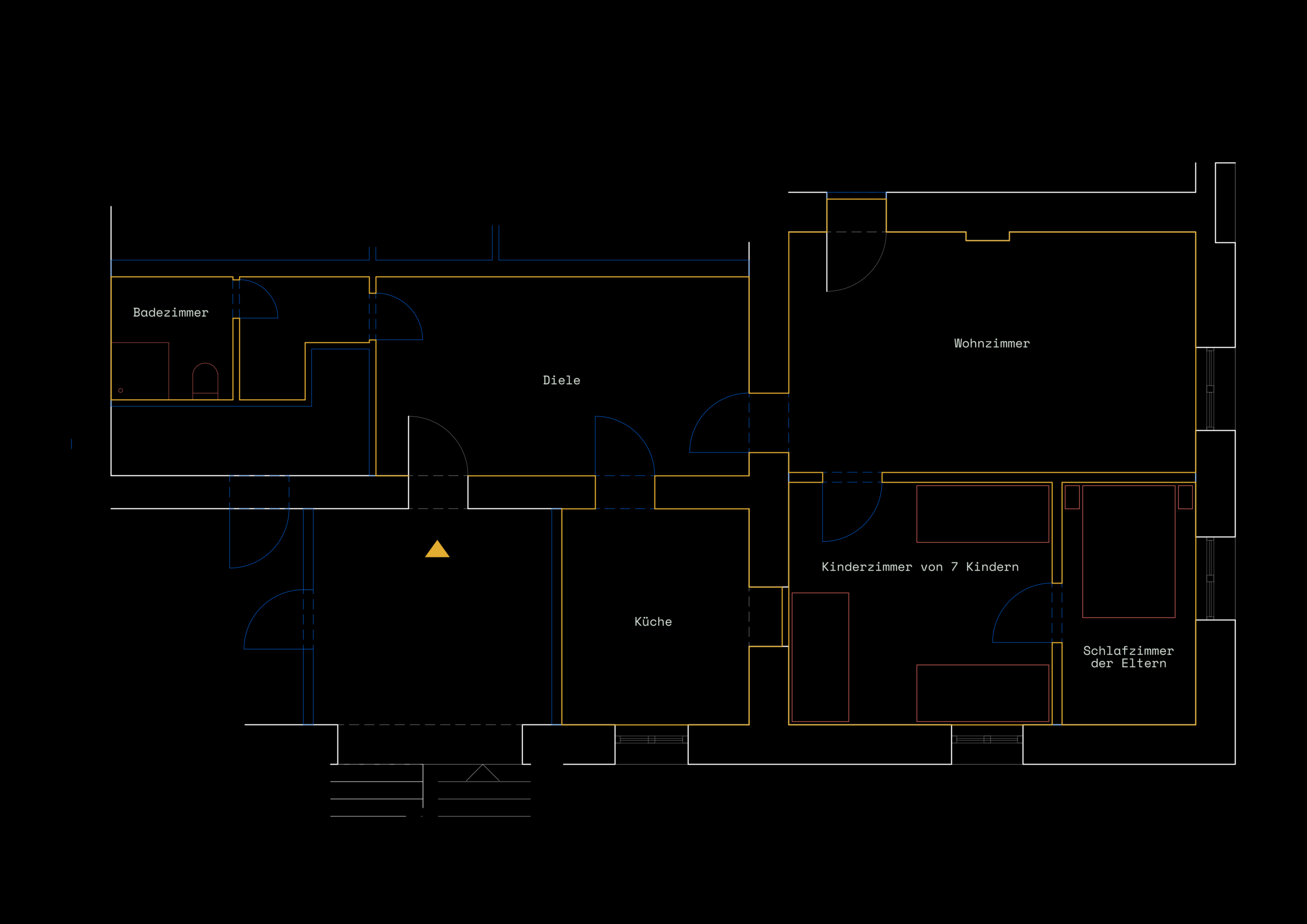
Badr was born in Germany in 1989. The family of seven lived together in a two-bedroom apartment in the villa. The bathroom, kitchen, and living room opened off the central hallway. There were also two bedrooms, and the family could use the adjoining section of the terrace as well. The five siblings shared the larger of the two rooms, which also served as a passageway to their parents’ bedroom. Seven of us living in 75 square meters; the building was already in poor condition at that time, with no heating—just a stove.
Badr recalls that four other families were living in the building at the same time. But then why couldn’t the family occupy more space? The other apartments were reportedly in too poor a condition. Had Hellmuth Eichhorn perhaps already given up the villa by that point?
For Badr, the villa has always been “just a home.” It was a simple life—going to preschool and back, learning to ride a bike in the garage, playing soccer on the patio, and having lots of kids over to play. It seemed to him like “a big playground.” e remembers a pear tree in the meadow and how, later on, they were always glad that the bus stop was right outside the front door. But of course, living together like that in such a small space also carries the potential for conflict. Looking back, he describes life in the villa as "like a small ghetto.". It wasn't until later that he realized his parents' attitude of “figure it out for yourself.” After all, as a child, you don't really notice the problems that much.
In 1997, the family finally moved out of Villa Buth and into an apartment in Jülich. Today, Badr Ouali has a degree in business administration, which he earned, among other places, at the University of Lincoln in the United Kingdom. He knows of two people who also grew up at Villa Buth and who, like their fathers, started working at Eichhorns. “We all start from the same place,” and many have also gone down the wrong path. And does he still keep in touch with his former teammates? Not him anymore, says Ouali, but his older brothers do.
Interview with Badr Ouali, an eyewitness, on December 10, 2025