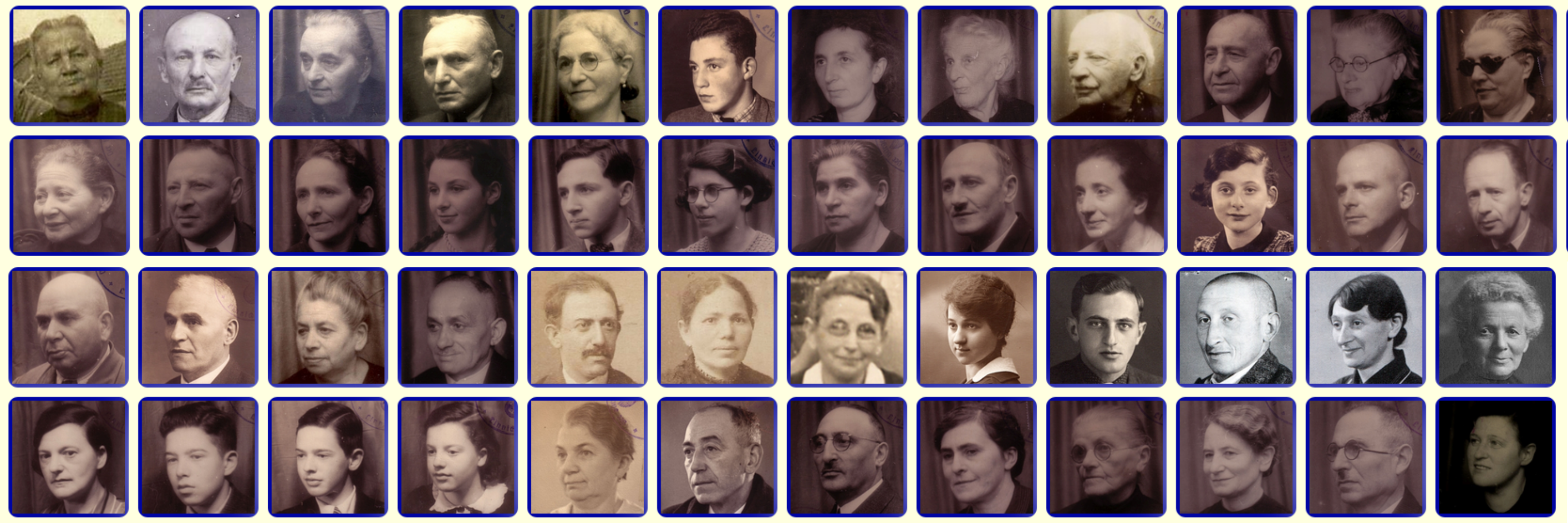
from 1941
Villa Buth as a Jewish transit camp
The years 1941 and 1942 saw what was arguably the darkest chapter in the history of Villa Buth,when, as Nazism took hold, the Jewish population of the districts of Jülich, Düren and Erkelenz was interned at Villa Buth [1]. At times, more than 100 Jewish men and women were housed in the building [2]. Their daily lives were characterised by strict rules and restrictions, and by constant uncertainty, for ultimately Villa Buth was merely a stopover in their lives – it served as a transit camp for the Jewish population prior to their impending deportation to ghettos and extermination camps [1]. Only a few of the inmates of Villa Buth survived the Nazi regime.
[1] T. Ohrndorf, „Villa Buth – Zwischenstation zum Holocaust – Ein Projekt des Heilig-Geist-Gymnasiums Würselen“, in Villa Buth: Zwischenstation zum Holocaust (Veröffentlichungen des Jülicher Geschichtsvereins 1923 e.V. 22), T. Ohrndorf und I. Gedig, Hg., 2. Aufl. Ammianus Verlag, 2024, S. 16–17.
[2] M. Kummer und T. Ohrndorf, „Architektur und Baugeschichte der Villa Buth, in Villa Buth: Zwischenstation zum Holocaust (Veröffentlichungen des Jülicher Geschichtsvereins 1923 e.V. 22), T. Ohrndorf und I. Gedig, Hg., 2. Aufl. Ammianus Verlag, 2024, S. 19–33.
on historical reappraisal
In light of the process of coming to terms with the past, a great deal of work has been donein recent years and continues to be done today. Publications recount the atrocities committed by the Nazis and the fate of the interned Jews.
go to the article
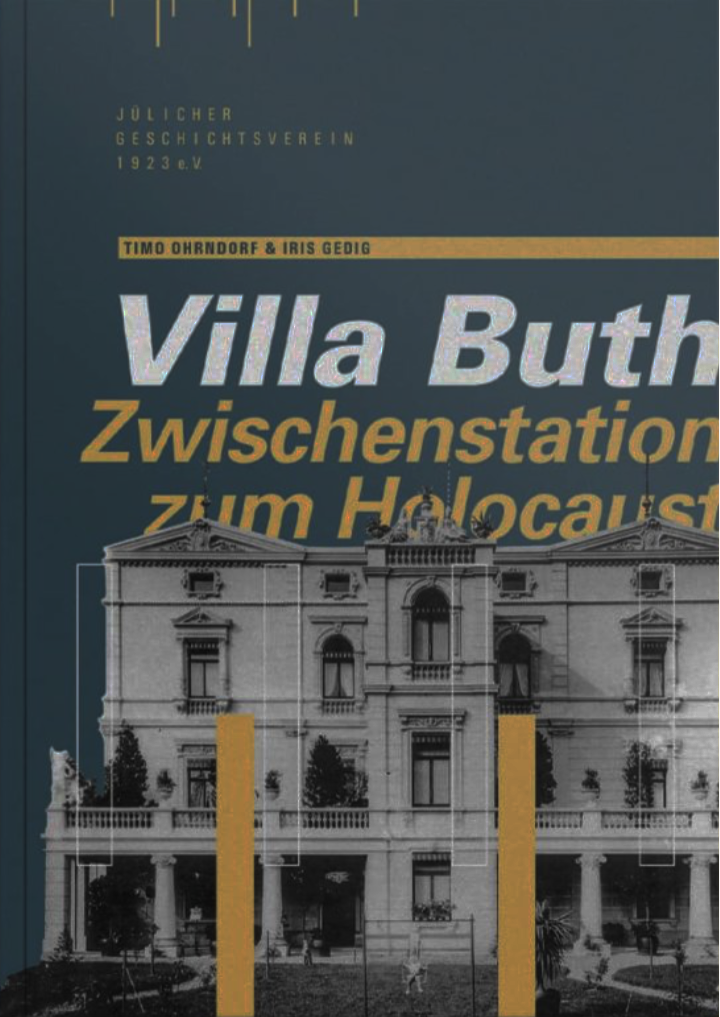
For a long time, it seemed as though this chapter in the building’s history had been kept under wraps. Today, however, a detailed historical investigation has been carried out. Particular mention should be made here of the project course at the Heilig-Geist-Gymnasium in Würselen, led by teacher Timo Ohrndorf, and the resulting publication “Villa Buth – A Stopover on the Road to the Holocaust”.
Among other things, the publication recounts the stories and fates of the Jewish men and women. It provides an insight into the strictly controlled daily life at Villa Buth and the humiliating and inhumane conditions under which the house’s residents were forced to live.
Life at Villa Buth
Memoirs by Friederike Goertz
As a young girl, Friederike Goertz moved into Villa Buth with her mother. In interviews, she talks about rooms divided by curtains,but also about childhood memories in which Villa Buth served as a fairytale castle. spielte.
go to the article
First-hand accounts provide occasional insights into the living conditions of the interned Jews in the building.
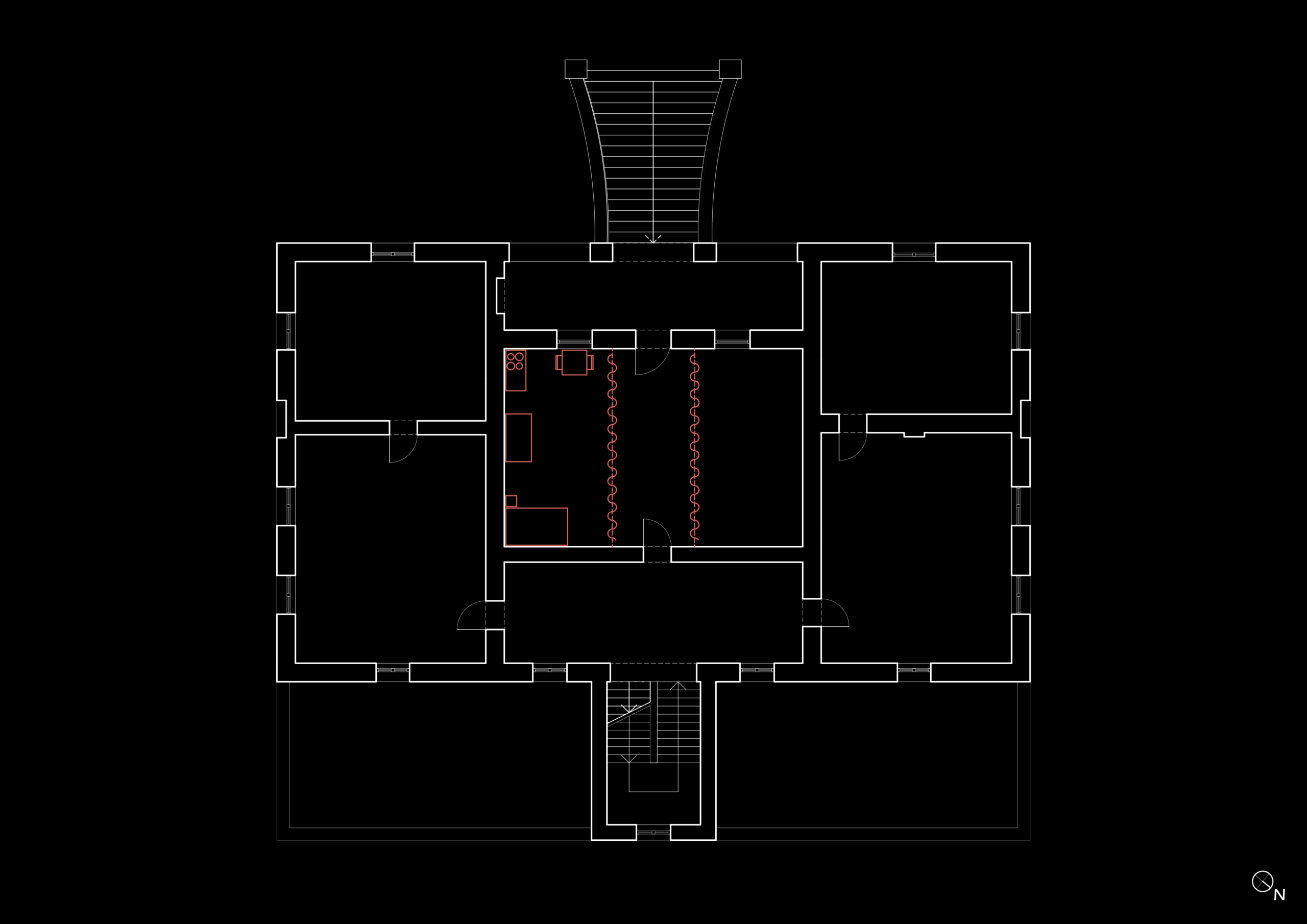
Particularly moving are the accounts given by Friederike Goertz, who came to the villa with her mother as a young girl and survived. “Villa Buth was like a fairytale castle to me” [1], she says, thereby highlighting the contradiction that has characterised the building since 1941. For Villa Buth looked – and still looks today – like a fairytale castle. Yet it was also a castle in which, at times, over 100 people were forced to find shelter [2], unsure of what fate awaited them. A castle whose vast halls were partitioned by curtains to create more ‘rooms’ and, presumably, to suggest just a semblance of privacy. A castle on whose steps Friederike Goertz used to act out ‘Cinderella’ with her uncle, and in doing so playfully learnt to read, at a time when it was not reasonable to send her to school. A castle surrounded by a wall that concealed and controlled what went on inside.
[1] Interview mit Friederike Goertz in: WDR (Juli 2019). Meine Mutter sah furchtbar aus. WDR Dossiers – Kindheit im Krieg. https://www1.wdr.de/dossiers/kindheit-im-krieg/video-meine-mutter-sah-furchtbar-aus-100.html
[2] M. Kummer und T. Ohrndorf, „Architektur und Baugeschichte der Villa Buth, in Villa Buth: Zwischenstation zum Holocaust (Veröffentlichungen des Jülicher Geschichtsvereins 1923 e.V. 22), T. Ohrndorf und I. Gedig, Hg., 2. Aufl. Ammianus Verlag, 2024, S. 19–33.
a difficult heritage
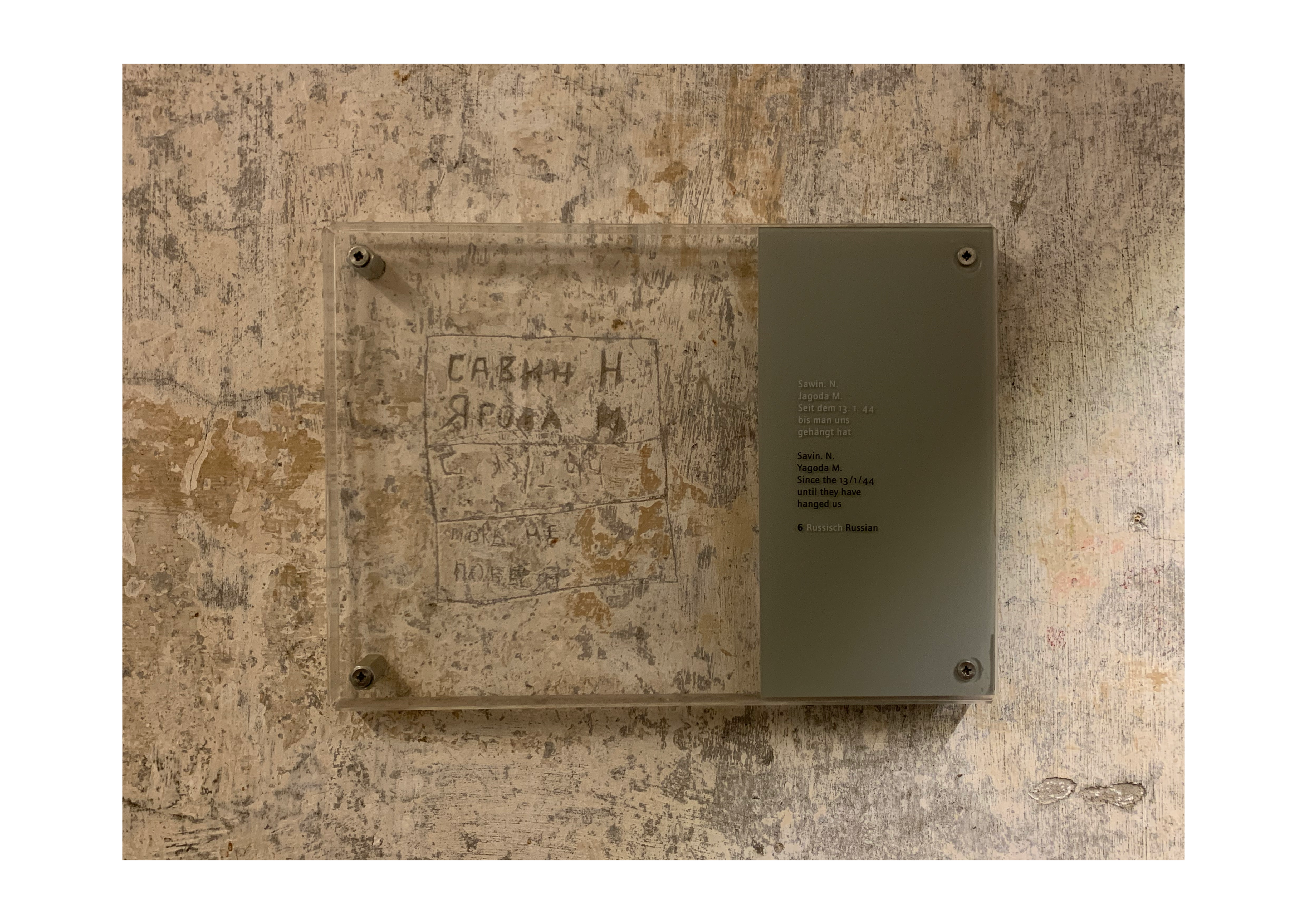
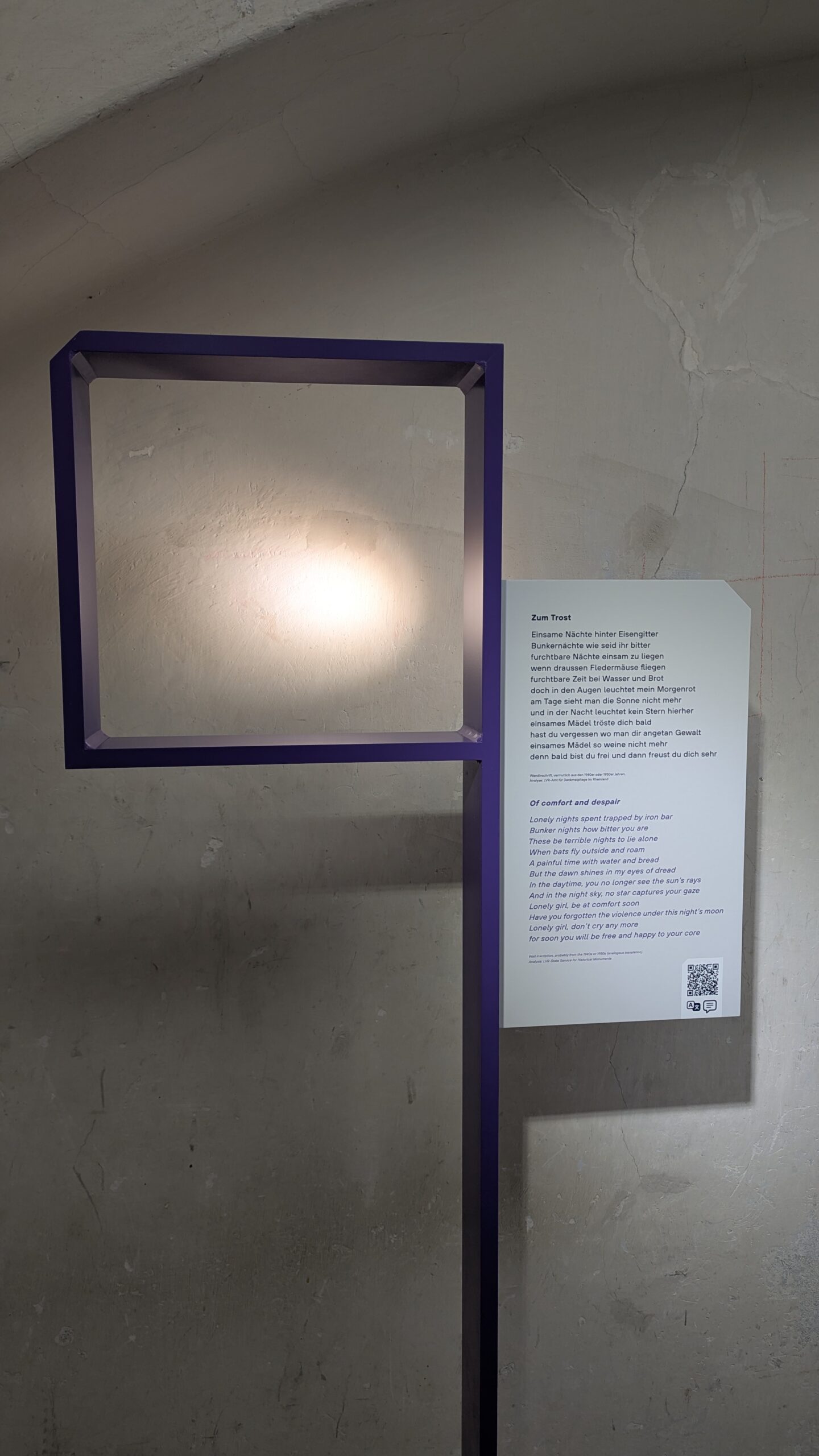
People leave their mark, particularly in times of despair and uncertainty. It is the purpose of such places not to erase these traces, but instead to commemorate the people behind them., ist Aufgabe solcher Orte.
go to the article
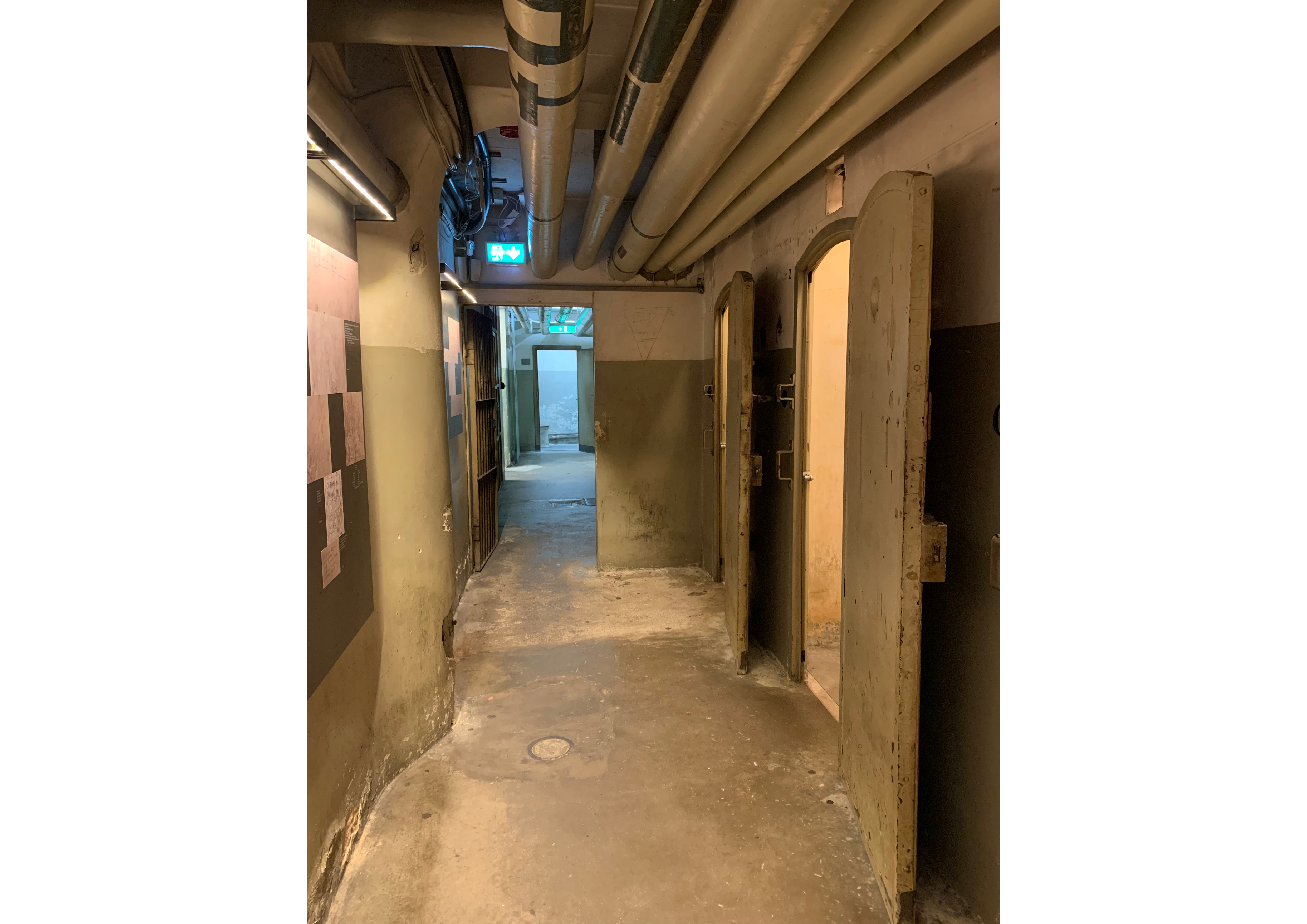
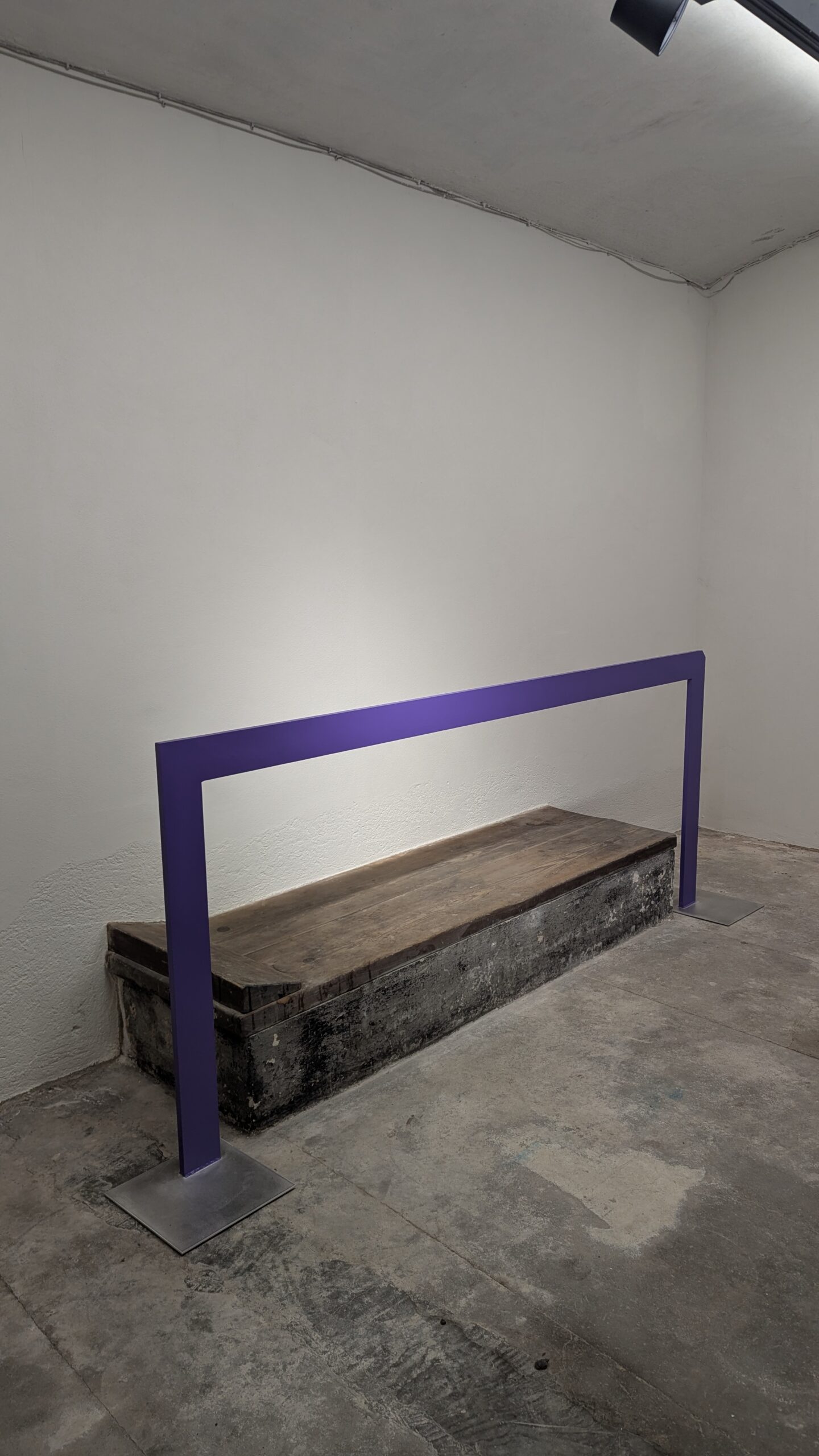
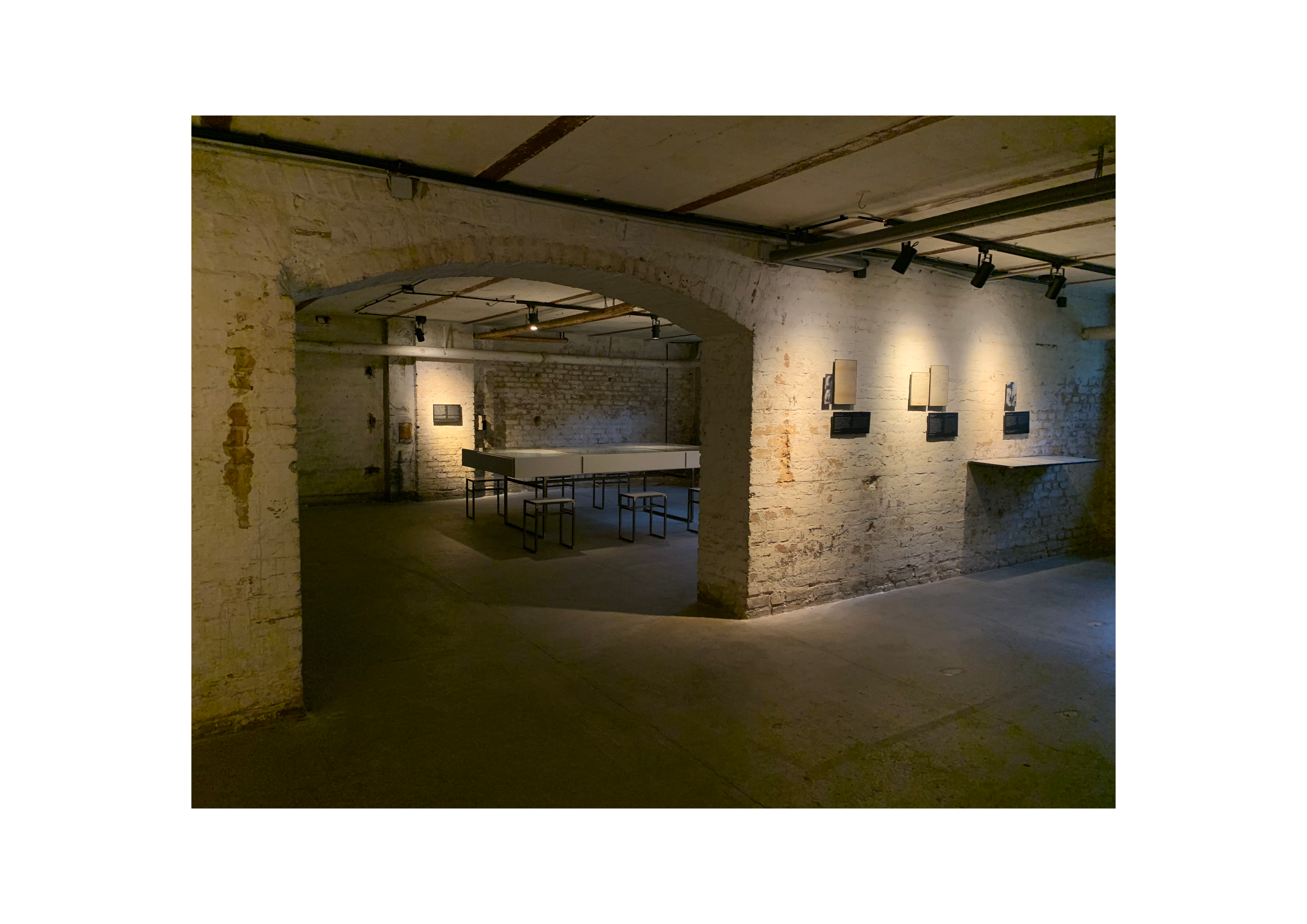
Villa Buth bears witness to its history - and to its victims. A difficult heritage. There is no better way to convey what happened – indeed, the feeling and the atmosphere – than at the very site of the atrocities. To stand within the walls surrounding the property. To recreate the living space as faithfully as possible and to see just how little space the people here had to make do with. But beyond that, the question arises: What traces can still be found within the walls? Architectural research would be particularly interesting in relation to this aspect of Villa Buth. Comparable buildings with a similar history show that people have left their mark – particularly those filled with doubt and despair, in moments of uncertainty.
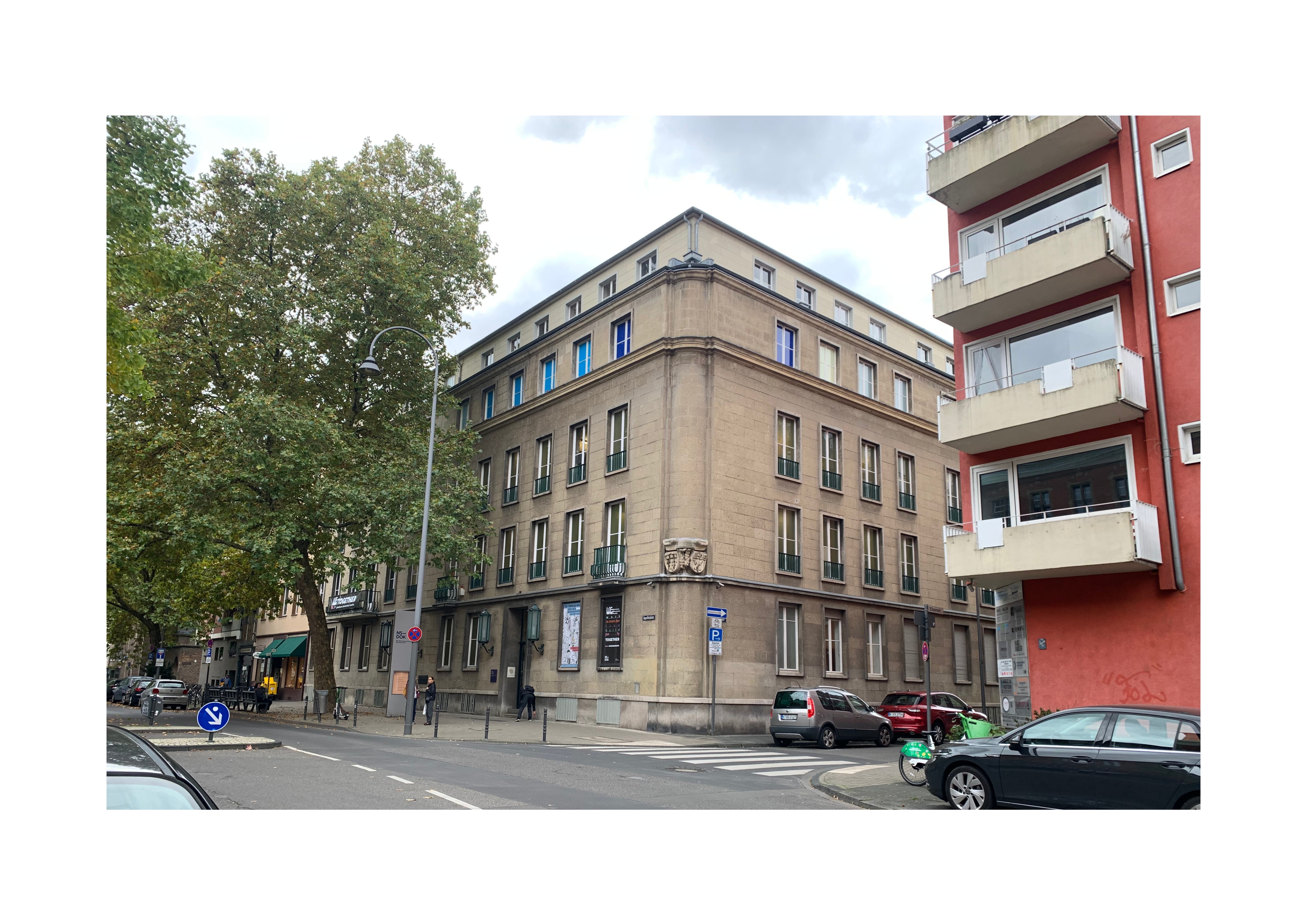
Such places, and with them the traces of their history, often form the basis for the creation of a memorial site. They themselves are the main exhibit through which history is conveyed. Examples include the Brauweiler Abbey Memorial, the Nazi Documentation Centre in Cologne, and, for instance, the SA prison on Paperstrasse in Berlin. People were detained in all these places during the Nazi era. Today, they bear witness to the victims’ stories, conveying what went through their minds during their darkest hours, whom they thought of, and to whom they wanted to leave a final message, harbouring the terrible suspicion that this might be the end of the line for them. In our view, it is the essential role of these places not to erase their traces, but rather to commemorate them.